IMF2026-10-14 05:42:40IMF and World Bank unveil Bangkok roadmap to combat digital financial fraudThe International Monetary Fund and the World Bank have unveiled a global roadmap in Bangkok aimed at tackling online financial fraud, according to Bloomberg Technology, as cited by Techub News. The initiative is framed as a response to increasingly sophisticated scam tactics that are eroding confidence in digital finance. The brief announcement did not disclose additional operational details, timelines, or specific enforcement measures, but it identified online fraud as a growing pressure point for trust in digital financial systems. The move places the two multilateral institutions behind a coordinated effort focused on fraud risks tied to the digital finance sector.110
Fintech2026-10-11 09:57:19Fintech Firms Are Folding Crypto Into the Backend, With Stablecoins at the Center of the Next Digital Finance CycleA report by IOSG author Benji Siem argues that a structural shift is underway across digital finance: large fintech companies are no longer treating crypto primarily as a speculative front-end product, but as backend infrastructure for settlement, liquidity and global money movement. The paper points to Stripe’s $1.1 billion acquisition of Bridge, Mastercard’s roughly $2 billion acquisition of Zerohash, and Robinhood’s launch of its own Layer 2 as signs of the same direction. Reviewing 10 major fintech companies, the report says the strongest operators are using blockchain rails, stablecoins and DeFi infrastructure to speed up settlement, lower costs and expand cross-border connectivity while keeping the user experience largely unchanged. Stablecoins, in this view, are becoming the bridge layer between traditional finance and on-chain markets. The report also separates business models by resilience. It favors payment-network tollbooth models, infrastructure-as-a-service platforms, recurring revenue tied to float or staking, and low-cost digital banking in underserved markets. By contrast, it flags heavy dependence on trading fees, payment for order flow, and crypto products with no sticky recurring revenue as weaker structures. Its broader conclusion is that the next winners in digital finance will combine distribution, regulatory trust and infrastructure control, then route value across multiple payment rails rather than rely on speculative exposure.250
Justin Sun2026-10-07 01:02:28Justin Sun says AI and digital finance are converging as HTX DAO holds Future Night in SingaporeHTX DAO held its "Future Night" event in Singapore on Oct. 6, where core supporter Justin Sun joined by video to outline his view of the crypto sector and the next stage of the digital economy. Sun said crypto is becoming more closely linked with traditional finance, a shift he described as part of the continued digitalization of global financial infrastructure. He drew a distinction between the roles of AI and crypto, saying AI is changing how wealth is created, while crypto and digital finance are changing how wealth is held and moved. Sun also pointed to several areas he believes will keep developing. He said stablecoins could take on a bigger role in global payments and settlement, while on-chain applications for traditional assets such as bonds, funds, and gold will continue to be explored. He added that once AI agents enter real economic activity, demand for identity systems, accounts, and independent transaction capabilities will grow. During the same period, HTX DAO said it would host several invitation-only events, and HTX Ventures is scheduled to appear at TOKEN2049 on Oct. 7-8 at booth PB5-47&48.180
DTCC2026-09-30 15:25:26DTCC, Citi and Swift say interoperability is key to scaling tokenizationThe Depository Trust & Clearing Corporation, Citi and Swift have jointly released a white paper titled The Connectivity of Digital Finance, arguing that interoperability will be essential if tokenization is to move beyond pilot programs and scale in real-world finance. According to DTCC’s post on X, the paper says tokenization is shifting from experimentation toward implementation, but its full value will depend on linking platforms so that assets, cash and data can move efficiently across traditional and emerging financial infrastructure. The paper describes the future financial system as a hybrid model in which legacy systems, private networks and public blockchains operate together. It also says programmability can embed rules and automation directly into digital assets, supporting automated asset servicing, compliance controls and event-driven payments. Combined with interoperability, those features could improve collateral mobility, liquidity management efficiency and market resilience, especially during periods of market stress. At the same time, the paper says institutional-grade digital markets still need clear regulation, legal certainty, investor protection, operational resilience and sound governance.460
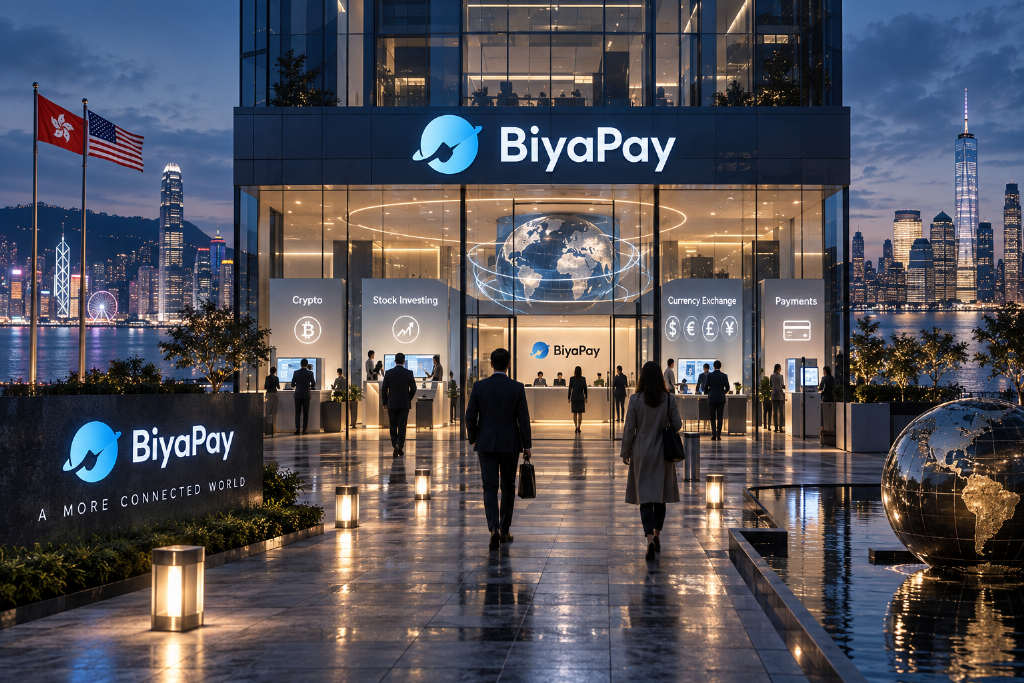
BiyaPay2026-09-22 08:17:09BiyaPay pushes platform buildout around global asset allocation and service connectivityBiyaPay is positioning its platform development around a practical question for users participating across markets: how to understand, access, and move between different financial services in one place. The company says its current platform effort centers on information display, operational continuity, and user communication, with the goal of making cross-asset participation easier to follow. According to the article, BiyaPay connects multiple asset-service channels and partner-provided services through its technical system, covering scenarios tied to stocks, crypto assets, fund exchange, and payments. It argues that for global users with different language habits, investment experience, and financial-service backgrounds, clear service explanations and localized communication matter as much as product access. The piece also gives a use case involving users who hold USDT and want to participate in U.S. or Hong Kong stock investing. In supported scenarios, BiyaPay provides access points through system integration so users can understand the path from digital asset exchange to preparing U.S. dollar or Hong Kong dollar funds and then moving into securities trading. The company notes that securities trading and other related financial services are provided by partner institutions, while availability depends on region, account eligibility, and applicable service conditions.440
Australia2026-09-22 05:29:31Australia’s 40-year economic outlook highlights AI but leaves crypto outAustralia’s latest Intergenerational Report puts artificial intelligence at the center of the country’s long-term economic transition, naming it one of five major shifts expected to reshape the economy over the next 40 years. The report, released Monday by the Australian Treasury, says agentic AI systems have become far more capable, autonomous and widely used, even exceeding human-level performance on some benchmarks. Yet it makes no mention of crypto or digital assets. That omission drew criticism from Coinbase Australia country director John O’Loghlen, who said the report focuses heavily on AI while overlooking the financial infrastructure those AI agents may eventually require. He argued that if Australia wants to turn technological adoption into long-term prosperity, it also needs to address the rails that could support digital finance, including tokenized stored-value frameworks for stablecoins and clearer rules for tokenized markets. The omission stands out because Australia’s central bank has increased its attention on tokenized finance and financial infrastructure upgrades this year, while the Digital Finance Cooperative Research Centre has estimated that digital finance innovation could add 24 billion Australian dollars, or $17.1 billion, in annual economic gains. Treasury’s separate Financial Innovation Strategy, released on Sept. 3, does acknowledge that agentic systems could drive demand for real-time, interoperable and programmable payment systems.490
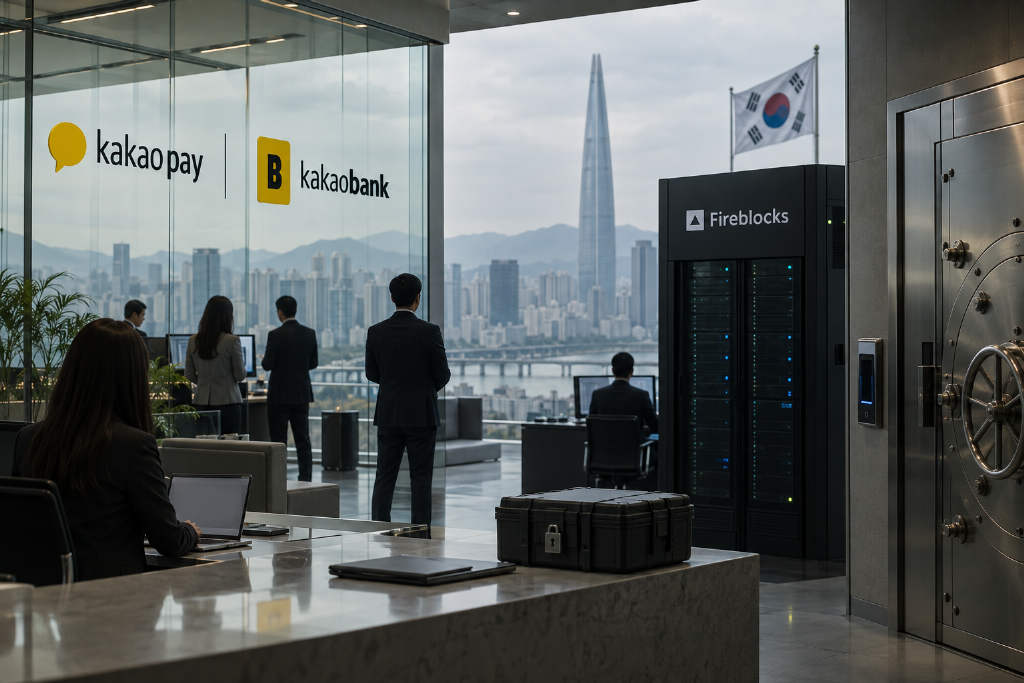
Kakao Pay2026-09-22 01:54:46Kakao Pay, Kakao Bank partner with Fireblocks to build digital asset infrastructure in South KoreaKakao Pay and Kakao Bank, both part of South Korean internet giant Kakao, have entered a partnership with digital asset custody platform Fireblocks to help build digital asset infrastructure in South Korea. The companies said the collaboration will center on improving innovation and security in digital asset services. By using Fireblocks’ security technology, the partnership aims to offer South Korean users digital asset services with stronger security and compliance standards. The announcement also said the effort is intended to support the development of the local digital finance ecosystem. The item was cited by Techub News, which referenced Crypto Briefing as the source.470
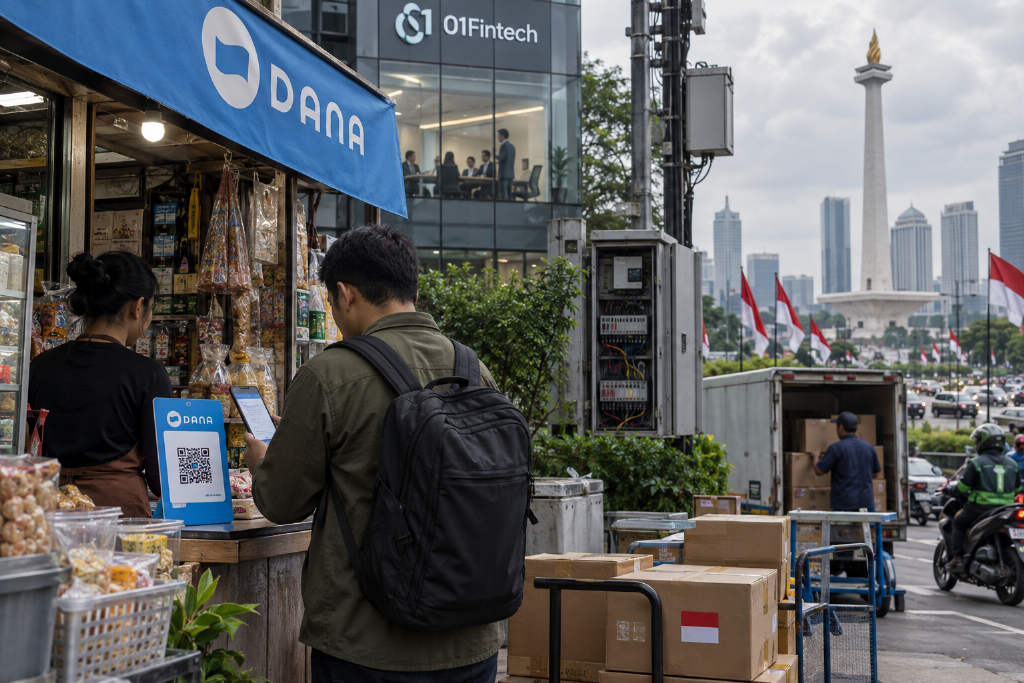
01F Group2026-09-21 06:41:2701F Group’s 01Fintech invests in Indonesian digital finance platform DANAGlobal investment platform 01F Group said its growth-stage fintech private equity arm, 01Fintech, has invested in DANA, a leading digital financial platform in Indonesia. The companies said the investment is intended to support local technology infrastructure, expand financial inclusion, and serve the country’s real economy. They also plan to explore services for micro, small, and medium-sized enterprises on the DANA platform, including access to credit and working capital. Other areas under discussion include micro-insurance, digital savings, and cross-border payments through 01F Group’s network. DANA has offered digital payments, QRIS, transfers, and AI-based financial solutions since 2018.390